What to Consider When Choosing Non-Emergency Transportation
This article offers a helpful guide for patients, caregivers, and families navigating the non-emergency medical transportation (NEMT) landscape. It explains the key factors to evaluate when selecting a transportation provider — such as ensuring the service matches an individual’s mobility needs, prioritizing safety protocols, reviewing vehicle accessibility and comfort, and confirming licensing and regulatory compliance. The post emphasizes how the right NEMT service can make routine medical appointments, treatments, and essential outings safer, more reliable, and less stressful for riders who require additional assistance.
Van's Med Tec
8/12/20263 min read
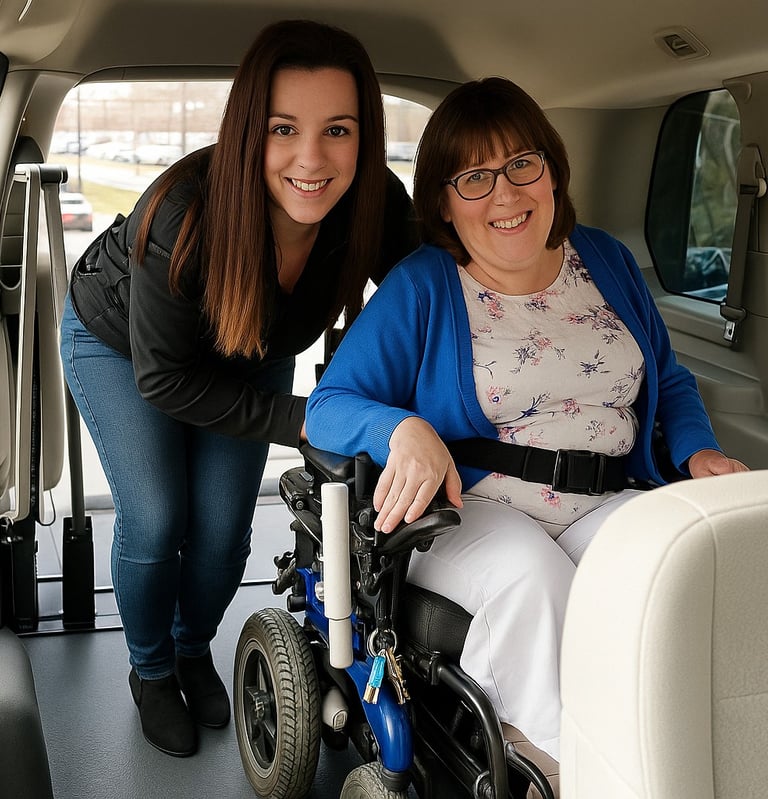
First and foremost, it is important to select a transportation provider that can offer the appropriate type of service required by you or your loved one. Not all providers offer the same types of services. For example, if you are required to remain in a wheelchair during transportation, using an ambulatory-only transportation provider that requires you to transfer out of your wheelchair and onto an ambulatory seat is not inappropriate. In fact, a provider encouraging you to transfer out of your wheelchair is presenting you or your loved one with less than safe circumstances.
You also want to select a provider with enough seating to accommodate an accompanying attendant such as an aide or family member. Especially for those with memory care issues, it is likely that an attendant will be present. The transportation provider needs to have adequate and secure seating capacity for all passengers.
Q. What is the difference between emergency and non-emergency transportation?
A. Emergency transportation is rendered by an ambulance service, typically Advanced Life Support (ALS) or Basic Life Support (BLS). Unlike emergency services providing direct medical care to patients during transport, non-emergency transportation does not include any type of skilled care. Although NEMT providers can direct assist in maneuvering and transferring patients, they do not provide any type of skilled medical care or attention.
Ambulance services also provide around-the-clock service and are required to respond to on-demand phone request. Although some NEMT providers will operate after hours and into the weekend, not all NEMT providers respond to on-demand requests. Most providers will require reservations to be made in advance to ensure adequate accommodations.
Q. What is the difference between Medicaid and Medicare?
A. Medicare is a health insurance program administered by the federal government. It serves individuals ages 65 and older and younger people with disabilities as well as individuals with end stage renal disease Medicare offers insurance coverage for hospital services (Part A), outpatient services (Part B) and covers outpatient prescription drugs via private plans (Part D). Medicare will cover a portion of the health care costs and may have premiums, deductibles and copayments.
Medicaid is health care coverage which is a needs-based assistance program. It is available for qualified individuals and families who have limited resources and covers a wider range of health care services to include non-emergency medical transportation. If you qualify for both Medicare and Medicare a large portion of the health care cost will be covered.
Q. Does Medicare cover the cost of non-emergency medical transportation?
A. For the most part, no, Medicare will not pay for non-emergency medical transportation service. The primary sources of NEMT include private pay, typically paid for by the patient, family member, or associated nursing/assisted living facility, Medicaid, and worker’s compensation.
There are isolated instances when Medicare will reimburse ALS/BLS services for non-emergency stretcher transports, but again, it is not the norm. There are also rare occasions when government agencies and programs will reimburse for a portion of NEMT service but be sure to check with and confirm with the respective agency or insurance before booking transportation.
Q. What do I need to make a reservation for non-emergency medical transportation?
A. If you or a loved one reside at home and are private pay, either they or you can make the necessary reservation by phone. We will need to know the date and time of appointment, the mode of transportation, the level of personal assistance, if there are any stairs or obstacles our drivers will need to navigate, if anyone will be accompanying you or your loved one to the appointment, and the payment method, either cash, check or credit card.
If you or your loved is not private and possibly covered by Medicaid or other, reservations would need to be made directly through Social Services, the Medicaid broker, or other governing agency who will contact us with trips and payment details.
If residing in formal nursing or assisted living facility, typically a case manager, social worker, or unit manager will contact us to make necessary appointment and travel arrangements. Depending on our relationship with that facility, cost of transportation might be covered by the facility, Social Services, or by you.
Contact Van's Med-Tech at (434) 836-5252 and a member of our staff will be more than happy to answer questions and confirm reservations.